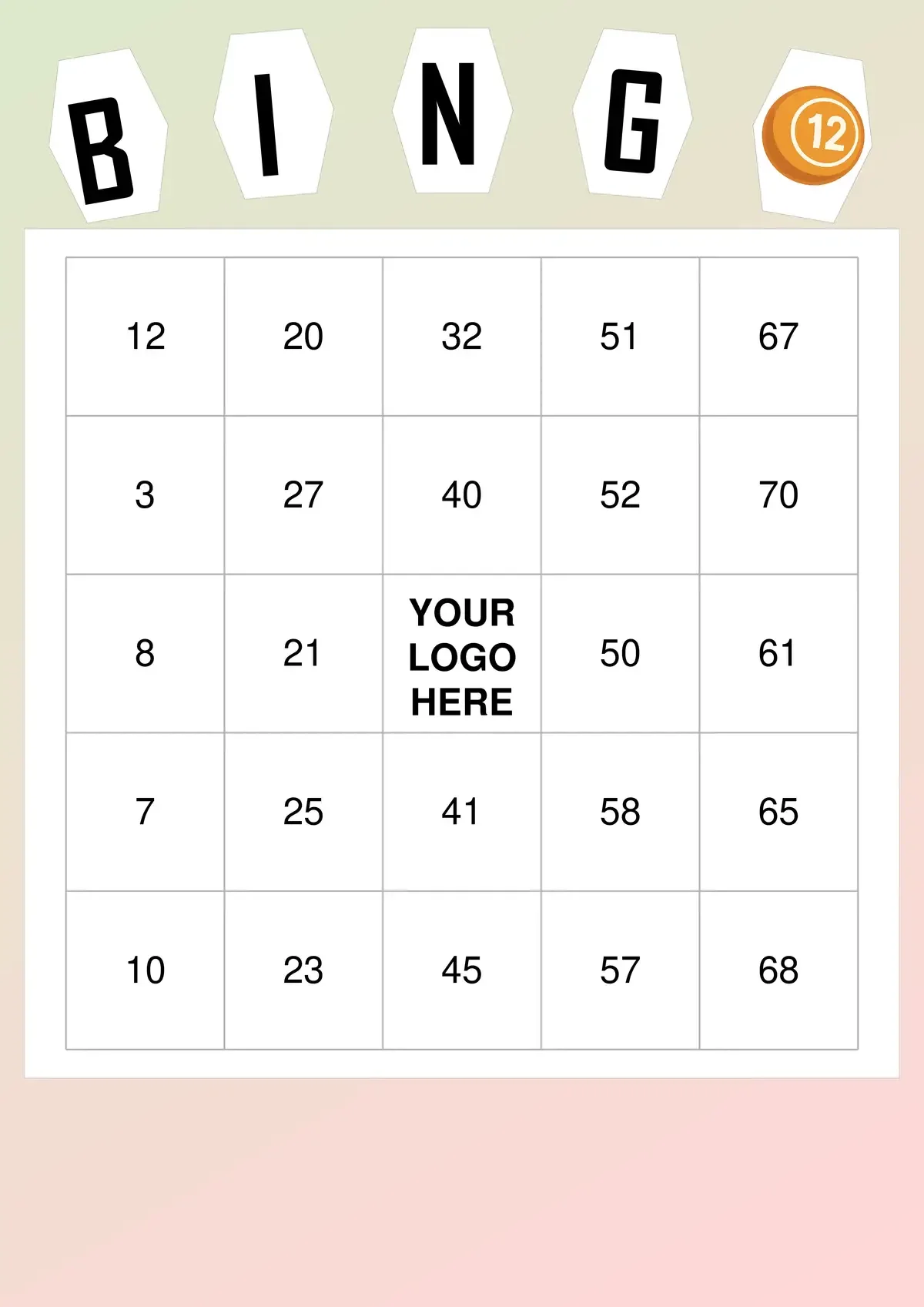
Short answer: sort of. An AI chatbot can absolutely design a gorgeous bingo card — a background, a theme, a layout. What it usually can't do is fill that card with a valid set of bingo numbers: 24 unique digits, each one sitting in its correct column range, truly randomized, with no repeats anywhere on the card. That part isn't a creative task. It's arithmetic and constraint-checking, and that's exactly the kind of task large language models are weakest at.
Here's why, and how bingosheets.net splits the job so you get the best of both — flawless math and fully custom design.
Why Can't an AI Chatbot Just "Do the Math"?
A tool like ChatGPT doesn't calculate a bingo card the way a spreadsheet or a script does. It generates each number by predicting what a plausible-looking bingo card tends to look like, based on patterns it has seen before. It's completing a pattern from memory, not running a shuffle.
That distinction matters enormously here, because a real bingo card has strict, unforgiving rules:
- Every number appears exactly once — no duplicates anywhere on the card.
- Every number sits in the right column — in 75-ball bingo, column B only ever holds 1-15, column I only 16-30, N only 31-45, G only 46-60, and O only 61-75. (See our guide to 75-ball bingo for the full layout.)
- The numbers are genuinely random — not just "random-looking," but drawn the way a real shuffle would draw them, so no pattern repeats from card to card.
- No two cards in a set are identical — if you're printing 30 cards for a room full of players, none of them can match, or you'll get simultaneous winners and a chaotic game.
A language model isn't built to enforce any of that. It's predicting the next plausible token, not sampling numbers without replacement from five separate ranges and then double-checking the whole grid for collisions. It can describe the rules perfectly if you ask it — and then break them the moment it actually tries to generate a card.
What Actually Goes Wrong When You Ask ChatGPT for a Bingo Card
Try it yourself and you'll typically see one or more of these failures:
- A number in the wrong column — a "62" quietly shows up under the "B" column, where only 1-15 belongs.
- A repeated number on the same card — "34" appears twice, once under N and once under G.
- Cards that aren't actually random — ask for five "different" cards for a class or office party, and several numbers (or even whole rows) turn out suspiciously similar, because the model is leaning on common patterns from its training data rather than a fresh random draw each time.
- A missing or misplaced FREE space in the standard 75-ball 5x5 layout.
None of this is a sign of a "bad" AI model — it's a mismatch between the tool and the task. Asking a language model to generate a valid bingo grid is a bit like asking it to deal a shuffled deck of cards and swearing every card is unique: it can talk about how a good shuffle works, but it isn't actually holding the deck.
How Bingosheets.net Gets the Numbers Perfect, Every Single Time
This is the part we don't leave to chance — or to a language model. Every card generated on bingosheets.net has its number grid built by straightforward, deterministic code, not a guess:
- Each column draws from its own pool. For 75-ball cards, column B pulls only from 1-15, column I only from 16-30, and so on. There's no way for a number to land in the wrong column, because it's never even offered numbers outside its range.
- Numbers are sampled without replacement. Once a number is used in a column, it's removed from that column's pool, so duplicates within a card are mathematically impossible, not just unlikely.
- Every card in a batch is checked against the others. When you print cards for a full room, we make sure no two players end up with an identical grid.
It's genuinely simple math — sampling and shuffling — but it has to be done exactly right every time, and that's precisely the kind of task computers (not chatbots) are built for. The result: cards that are flawless, truly random, and unique, whether you're printing 1 or 500.
Where AI Does Belong: Designing Your Card, Not Calculating It
Here's the flip side. While we don't trust AI with the numbers, we love what it can do with the look of your card. Design — imagining a background, a color palette, a theme nobody's made before — is exactly the kind of creative, open-ended task generative AI is good at.
That's why bingosheets.net's AI Background Generator lets you type a description — "a cozy autumn coffee shop," "a neon retro arcade," "a watercolor garden" — and get a one-of-a-kind design in seconds, while the number grid underneath is still generated by the same flawless, verified math every other card gets. You get full creative control over the design, without ever risking a broken card.
The Bottom Line
AI can absolutely help make your bingo cards — just not by inventing the numbers. Let generative AI handle the art, and let real math handle the grid. That's exactly how bingosheets.net builds every card: manually verified randomization for the numbers, AI-powered customization for the design.
Ready to see it for yourself? Create your free, flawless bingo cards now — with classic designs or a fully custom AI background.