Every bar has a night that dies. The weekend takes care of itself, but on a Tuesday the staff outnumber the guests. Bingo is one of the oldest and cheapest ways to fix that: a free game that gives people a reason to come on that exact night, stay for two hours and bring their friends.
Bingo spent decades in church halls and bingo halls. Over the last few years it has moved into bars and pubs, and a younger crowd has turned it into a weekly habit, complete with loud hosts, silly prizes and a phone photo of every winning card.
What is a bar bingo night?
A bar bingo night is a regular event, usually weekly, where a host calls numbers from a stage or the end of the bar and guests play on printed cards at their tables. Most bars run it free to enter and give prizes from the house. Popular formats include:
- Classic number bingo. 75-ball cards in North America, 90-ball tickets in UK and Irish pubs.
- Music bingo. The squares hold song titles instead of numbers, and the host plays a few seconds of each track.
- Themed word bingo. A 90s night, a film night or a sports night, with the squares full of words from the theme.
- Drag bingo. A drag queen hosts, and the show matters as much as the game. It fills big-city bars on the quietest nights of the week.
Why bingo works on a slow night
- It gives people a date. "Bingo is on Tuesdays" is easy to remember, and a fixed night builds regulars faster than any happy hour.
- People stay. A bingo night lasts about two hours, and nobody leaves halfway through a game they might win. That means a second and a third round, and often food.
- It brings groups. Bingo is social. People come as a table of four or six, and a group spends more than a single guest at the bar.
- Anyone can win. A pub quiz tends to crown the same clever team every week. At bingo, the newcomer has exactly the same chance as the regular, so newcomers come back.
- It costs almost nothing. Paper, a host and a few prizes.
How to run it, step by step
- Pick the night. Choose your slowest weekday and keep it the same every week. A start at 7:30 or 8 pm with five or six games in about two hours works for most bars.
- Find a host. A member of staff with a microphone is enough, but the host makes the night. Jokes, banter and the old calls ("legs eleven", "two little ducks, 22") keep a room laughing between numbers.
- Print the cards. Make a stack of cards for the night with a free bingo card generator. Every card prints its number and a short check code at the bottom, such as 7QX2K-001. Card numbers are on by default, so there is nothing to tick, and that code is what lets the bingo machine check a winner in seconds. UK pubs can print 90-ball tickets instead, with one code per strip of six.
- Put the machine on the TV. Open an online bingo caller on a laptop connected to the bar's screens, so every table sees the ball. The board of called numbers settles every argument. For 90-ball, use the 90-ball caller.
- Plan the rounds. Start with quick games (one line, four corners) and save the full card for the last game with the biggest prize. Leave a few minutes between games so people can order.
- Check winners on the TV. When someone shouts, press "Check a card" on the bingo machine and type the code from their card. The card appears big on the screen with the called numbers marked and its complete lines counted. It takes seconds, you still decide whether it wins, and the room enjoys the drama.
Check winning cards in seconds
On a full night, the slowest moment is checking a winner: three tables shout at once, the host squints at a crumpled card and the room loses interest. The check code fixes that. Type the code from the winner's card into "Check a card" (the ✓ button at the top of the bingo machine, or the C key), and the machine rebuilds exactly that card, marks the numbers called so far and counts its complete lines, for example "1 vertical line, 2 horizontal lines and 1 diagonal = 4 lines" or "Full card". On 90-ball, each of the six tickets on the strip shows its own count. The card appears big on the bar's screens, so every table watches the check, and you decide whether it wins the round, whatever pattern you play. A mistyped code is usually caught, and you can always compare the card on the screen with the paper one.
Every PDF you print gets its own code, and codes from different print runs never clash. Last week's leftover stack and a fresh one printed tonight can be mixed in the same game. Just keep the game types apart: 75-ball cards are checked on the 75-ball machine, and 90-ball tickets on the 90-ball machine.
Bar Wi-Fi tends to give up on a busy night. Once the bingo machine page is open, drawing, the board and "Check a card" keep working without a connection, so open it before the guests arrive and don't close the tab: a reload needs the internet. The spoken calls use the laptop's own voices, which work offline on most devices; try it once with the Wi-Fi off before your first night.
Prizes that pay for themselves
The best prizes bring the winner back: a bar tab, a pitcher or a bucket of beer, a free pizza next week, a round of shots for the winning table or the bar's own T-shirts and glasses. Local businesses are often happy to donate a prize in return for a mention on the microphone. A running jackpot for a full card within a set number of calls gives people a reason to return even when they lose.
Is bar bingo legal?
It depends on where you are. In many countries and states, bingo where players pay to play for prizes counts as gambling and needs a licence, while free entry with prizes from the house is treated differently. Check with your local licensing authority before you charge for cards or give cash prizes.
Your logo on every card is free advertising
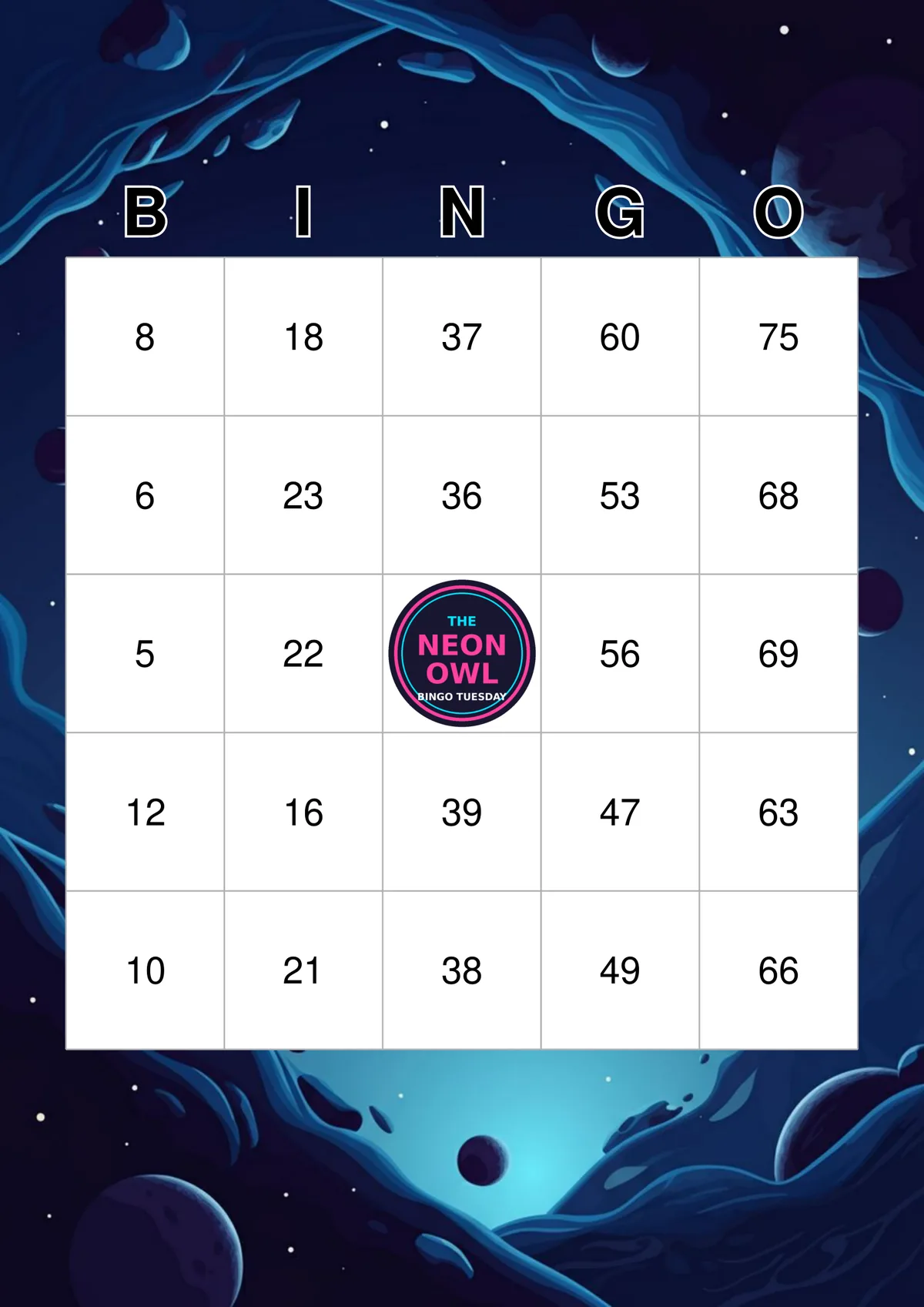
Watch any bingo night in a bar full of twenty-somethings: people take a photo of their card and post it, especially when they win. If your bar's logo sits in the free square in the middle, every one of those photos carries your name to hundreds of followers.
Upload your logo once in the generator and it prints in the centre square of every card. Put your Instagram handle in the logo image and the photos do even more work. Add a background that matches your theme night, and the cards look like part of the brand instead of a photocopy. Free cards carry a small watermark line under the grid; removing it is a one-off payment per PDF. For more on branded cards, see custom bingo cards with your logo.
Theme ideas for a bingo night
- Decade nights. 80s or 90s music bingo with a dress code.
- Seasonal nights. Halloween, Christmas jumpers or a summer beach night.
- Sports season. Word bingo with things that happen during the big match on the screen.
- Drag or comedy bingo. Book a performer to host once a month.
- Charity night. Donate part of the evening's takings to a local cause and let the charity bring a crowd.