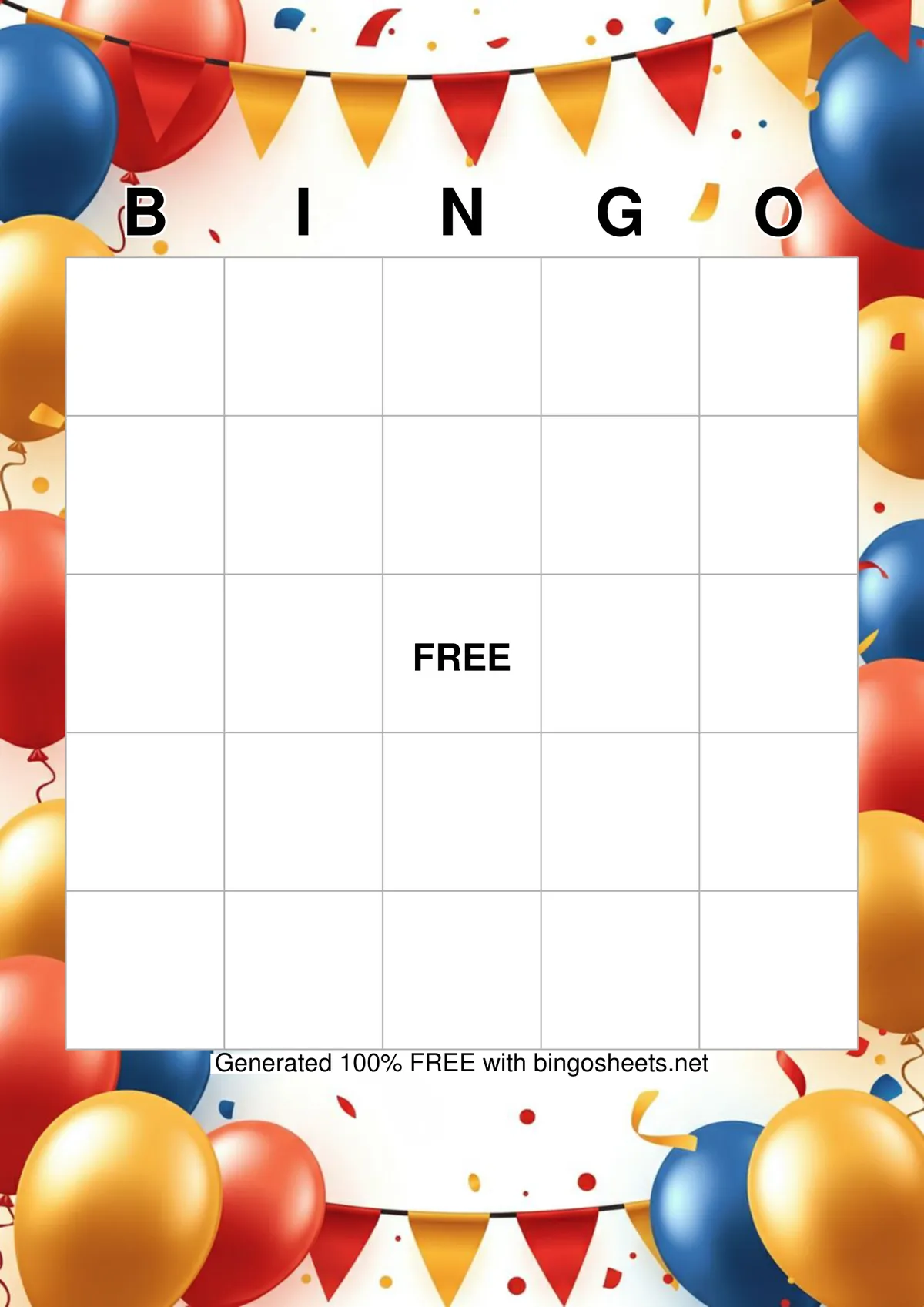
Sometimes the best bingo cards are the ones the players make themselves. Hand everyone an empty grid and a pen, agree on a theme, and the game stops being about numbers: it becomes a game about your class, your family, your team or your party. Writing the words in is half the fun, and nobody has seen the cards before the game starts, not even the host.
This guide shows how to print empty bingo grids for free, how to run a game where everyone fills in their own card, and what to write in the squares.
What is DIY bingo?
DIY bingo is ordinary bingo with one difference: the cards start out empty. Each player gets a 5×5 grid with B-I-N-G-O across the top and the free square in the middle, and fills in the other 24 squares before the game begins. The caller then reads out words instead of numbers, and the first player to mark five in a row wins.
Because every player writes their own card, no two cards are alike, and nothing has to be shuffled by a computer. You need nothing but a printer and some pens: no word list prepared in advance and no special equipment.
How to make an empty bingo grid
You can draw a grid by hand, but it takes a ruler, a steady hand and a lot of time if you need thirty cards. Printing them is quicker:
- Open our blank bingo card generator. Word bingo is already selected, with "Leave the squares blank" ticked.
- Pick a background, or tick "Use black and white (printer friendly)" to save ink.
- If you like, upload a logo or a photo for the centre square. Otherwise it simply says "FREE".
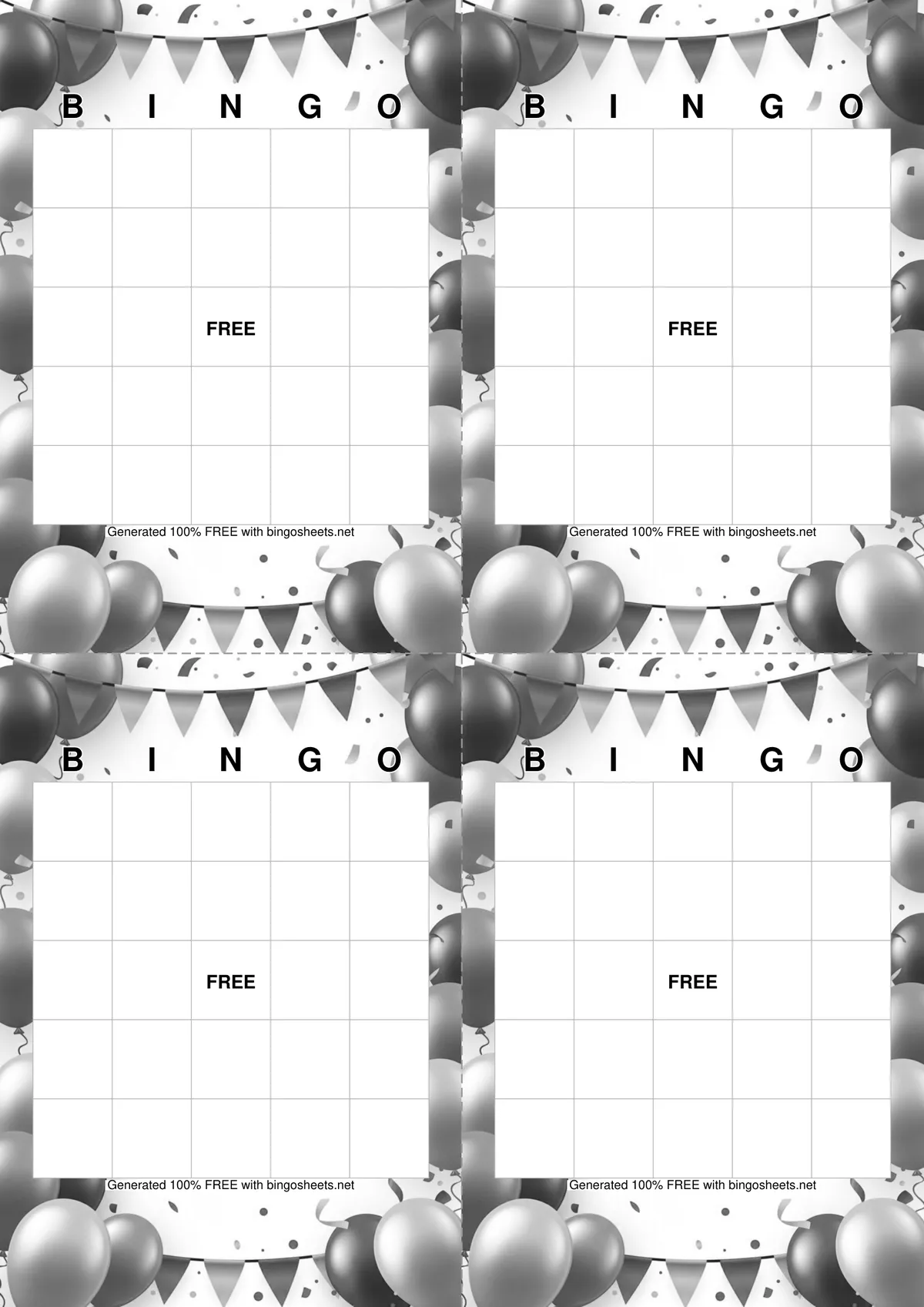
- Choose a layout. One card per page gives the biggest squares, best for young children and long words; four cards per page saves paper when the words are short.
- Choose how many cards you need (one per player, plus a few spares for mistakes), then download the free PDF and print it.
How to play: write your own bingo words together
- Agree on a theme. Anything the group knows well works: this week's vocabulary, the family, the film you are about to watch, the office, the holiday.
- Build a word pool together. Everyone calls out suggestions and one person writes them on a whiteboard, a flipchart or a sheet of paper. Aim for 30 to 50 words (see the tips below for why).
- Fill in the cards. Each player picks 24 words from the pool and writes them into their grid in any order. Keep the pool visible, so the spelling on the cards matches what will be called.
- Make the calling slips. Write every word from the pool on its own slip of paper, fold the slips and put them in a bowl, a hat or a bag.
- Play. Draw one slip at a time and read it out. Players mark the square if they have that word, and the first to complete a row, a column or a diagonal shouts "Bingo!". Keep the drawn slips on the table so you can check the winning card.
For a longer game, carry on after the first winner and play for two lines or for a full card.
A variation: prediction bingo
Some DIY games need no pool and no caller at all. Before a party, a film, a match or a road trip, everyone writes down 24 things they expect to happen: "someone spills a drink", "the goalkeeper gets a yellow card", "we stop for coffee twice". Each square is marked when it actually happens, and the first player whose predictions make a line wins.
Ideas for DIY bingo
- Spelling and vocabulary. Writing the week's words into the grid is already practice. Then read out definitions, translations or example sentences and let the class find the word.
- Maths. Players write any 24 numbers from a range such as 1 to 50; you call out sums or questions, and they mark the answer.
- Baby showers. Before the presents are opened, each guest fills in 24 gifts they think the parents will receive: a bib, a baby monitor, a stuffed bunny. Tick them off as the wrapping comes off.
- Bridal showers and weddings. Things the couple always says, or moments you expect in the speeches.
- Family gatherings. Grandpa's favourite stories, the phrase someone says every time, the dish that appears every year. Nobody outside the family could have written these cards.
- Road trips. Things to spot out of the window: a red car, a cow, a bridge, a caravan.
- Film and TV nights. Catchphrases, plot twists and clichés of the series you are watching.
- Sports matches. Prediction bingo: a penalty, a header, a substitution before half-time.
- Icebreakers. Everyone writes one fact about themselves on a slip ("has run a marathon", "speaks three languages"). The slips become the pool, players copy 24 of them into their grids, and every call starts a round of guessing who it is.
- Book clubs. Characters, places and quotes from the book of the month.
Tips for a smoother game
- Use 30 to 50 words in the pool. With exactly 24, every card holds every word and only the order differs, so a full-card game ends with everyone winning on the same call. A bigger pool makes every card different.
- Write clearly. Other players may have to read your card when they check a win.
- Reuse the cards. Slip the printed grids into clear plastic sleeves or laminate them, and write with dry-erase markers. After the game, wipe them clean for the next theme.
- Mark the squares with stickers, coins, buttons or a pen in another colour, so the handwritten word stays readable.
- Print a few spare cards, because someone will always want to start over.
Blank cards or printed words?
Empty grids are the right choice when writing the words is part of the game. When it is not (a large group, little time, or players too young to write), let the generator do the work: word bingo prints your own list onto every card in a different order. The two also combine well. In the word list, a line with nothing but a space stays empty on the card, so you can print the words everyone must have and leave a few squares for each player's own ideas.