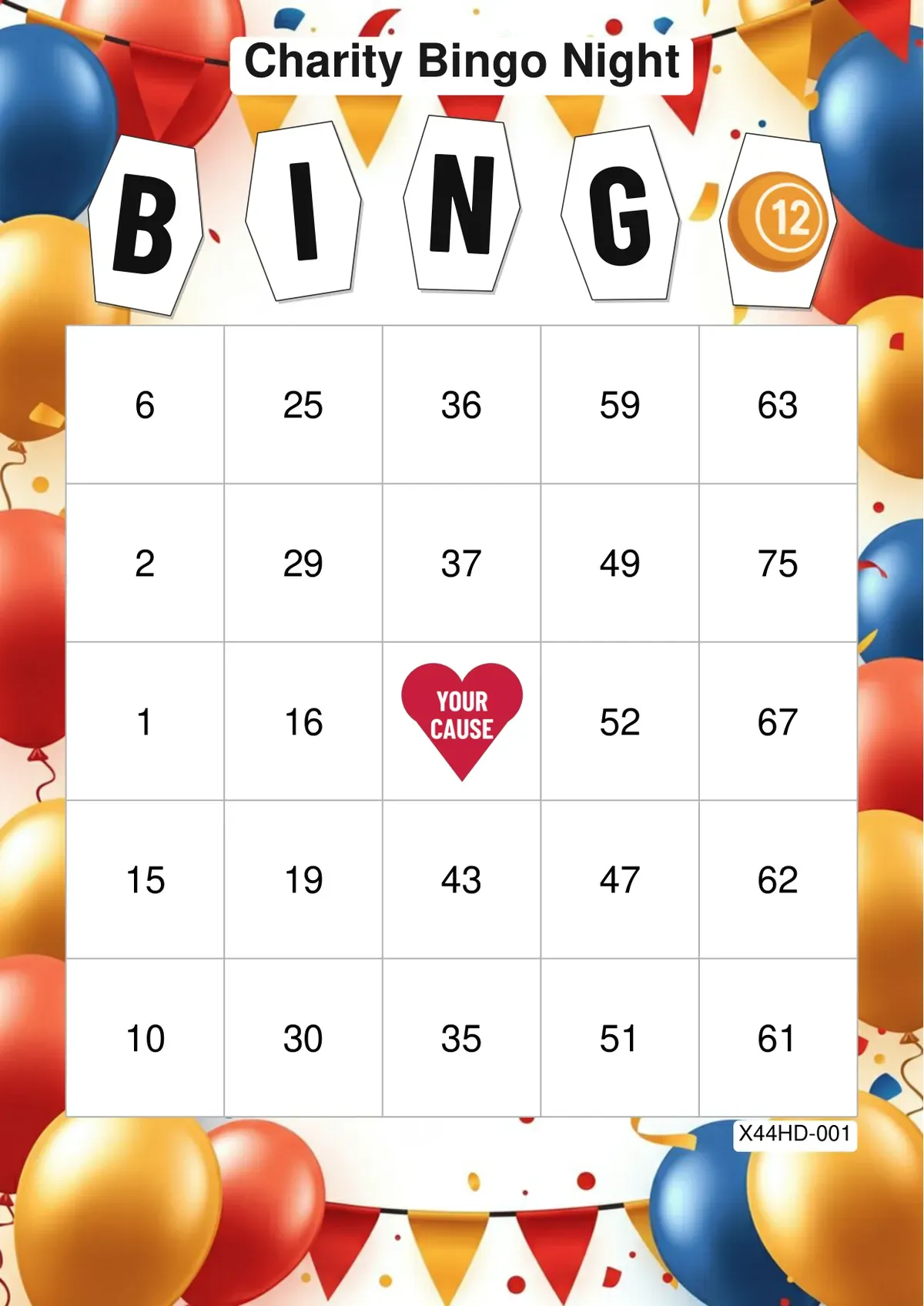
Bingo is one of the easiest fundraisers there is. Everyone already knows the rules, it works for every age from grandparents to schoolchildren, it costs very little to set up, and the same evening works for twenty people in a classroom or three hundred in a sports hall. This guide walks a school, club, sports team or charity through the whole thing: the rules to check first, what to charge, where the prizes come from, the cards, the night itself and the extra money around the edges.
Before you start: check the local rules
Games where people pay to play for prizes are regulated in many countries, states and municipalities. A fundraiser for a registered charity, a school or a club is often allowed, sometimes with a simple permit, a cap on prizes or a rule that the proceeds go to the cause. Check with your local authority or your national lottery and gaming regulator before you sell cards, and keep a note of what you sold and what you paid out. Free entry with donated prizes and a donation box at the door is treated differently in many places.
Step 1: Pick the format and the date
- Number of games: six to ten games fill an evening of about two hours with a break. Plan one or two bigger games, such as a full house for the main prize, near the end.
- 75 or 90 balls: 75-ball bingo on a 5x5 card is the American game; 90-ball bingo on tickets of three rows is played in the UK, Ireland, Australia and much of Europe, where it may be called housie, tombola or loto. Pick the one your guests know.
- Venue: a school hall, club house, church hall or a bar on a quiet night. You need tables, chairs, a screen or projector, and somewhere to sell cards at the door.
Step 2: Set the price of the cards
Keep it simple and easy to pay. Most fundraisers sell one card per game, or a book of cards for every game of the night at a small discount. A quick sum shows what to aim for: 80 guests who each buy a book of eight games for 10 (dollars, pounds or euros) bring in 800 before the raffle, the bar and the donations. Leave room for families with several children: a family price for two adults and their children sells well.
Step 3: Ask local businesses for prizes
Donated prizes keep the whole ticket income for the cause. Ask local shops, restaurants, hairdressers, gyms and garden centres for a voucher or a product; most say yes to a school or a charity, especially when you offer something back:
- their name read out when their prize is won,
- their logo on the cards or on the screen,
- a thank-you post on your social media after the night.
Keep the best prize for the last game of the night, so people stay to the end.
Step 4: Print the cards with your logo
Make the cards in our bingo card generator: pick 75-ball, 90-ball or word bingo, add your school's, club's or charity's logo to the centre square, choose a design and download one PDF ready to print. Every card is different, and every card carries a short check code at the bottom.
- How many: one card per player for every game played on paper, plus about ten percent spares. Players who mark with counters instead of pens can keep one card for several games.
- Free or without the watermark: free PDFs hold up to 240 cards each and carry a small bingosheets.net line under the grid. For a cleaner look, or a big night with up to 960 cards in one file, pick the paid watermark-free PDF, which keeps the check codes.
- Black and white: tick the printer-friendly option to print a few hundred cards cheaply on the school or office printer.
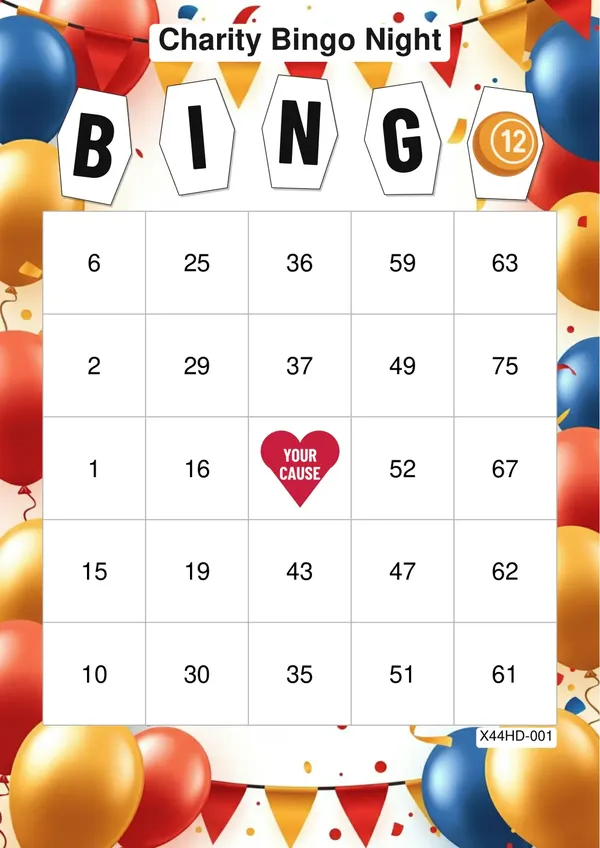 A fundraiser card with an event title and a sample logo in the centre square. Your own logo goes in the same place.
Step 5: Run the numbers on a big screen
Put our free bingo machine on the projector or a TV. It draws the numbers, shows each one big enough to read from the back of the hall, reads them aloud and lights up the board, so nobody argues about what was called. It keeps working without internet once the page is open, which matters in a school hall with weak Wi-Fi.
When someone shouts "Bingo!", type the check code from their card into "Check a card": the card appears on the screen with the numbers called so far marked and its complete lines counted, and the whole room sees the check. It takes seconds instead of a volunteer reading numbers back.
Step 6: Plan the volunteers and the evening
Three or four volunteers are enough for a hundred players:
- at the door: selling cards and books, taking donations,
- the caller: runs the bingo machine and announces the games and the prizes,
- the checker: checks winning cards with the check code and hands out prizes,
- the bar or snack table: often the second-biggest source of income.
A typical evening: doors open 30 minutes before the first game, four games, a 20-minute break for the raffle and snacks, four more games with the main prize last, and a final announcement of the total raised.
Extra income around the games
- A raffle during the break, with a few smaller donated prizes.
- Snacks and drinks, ideally donated or bought at cost.
- A special game with a bigger prize and its own card at a higher price.
- A donation box at the door and a QR code for online donations on the screen during the break.
After the night
Announce the total on the night if you can, thank every sponsor by name, and post a photo and the amount raised. A good first night is the best advert for the next one, and if bingo becomes a regular fundraiser, a branded bingo machine at its own address puts your logo on the screen every time.
Make your fundraiser bingo cards now and put your cause's logo on every card.